
SHORT ANSWER
Reduce dust by controlling its sources, cleaning surfaces without spreading particles and maintaining filters recommended for your heating and cooling system. A completely dust-free home is not realistic. If dust may contain lead, asbestos, mold or debris from a fire or renovation, avoid disturbing it and seek appropriate professional guidance.
What household dust contains
Household dust is a mixture rather than a single substance. It can include particles tracked indoors, fibers from fabrics, skin particles, pet dander and material from outdoor air. The mixture differs by home, activities and local conditions, so appearance alone does not identify its contents.
A dusty shelf does not automatically mean the air ducts need cleaning. Look first at ordinary sources: shoes, open windows during dusty conditions, pets, fabrics, renovation debris and a poorly fitted or overdue system filter. Change one factor at a time and see whether buildup improves.
Start at the entry
Use a doormat, remove dirty shoes where practical and clean entry floors regularly. Keep construction or hobby work separated from living spaces and contain debris according to the nature of the material. Avoid shaking dusty textiles indoors, which can put settled material back into the air.
Ventilation is useful when outdoor air is clean and weather permits, but an open window during nearby smoke or heavy dust may bring particles indoors. Choose the ventilation strategy for current outdoor conditions and the needs of the occupants.
Clean from higher surfaces down
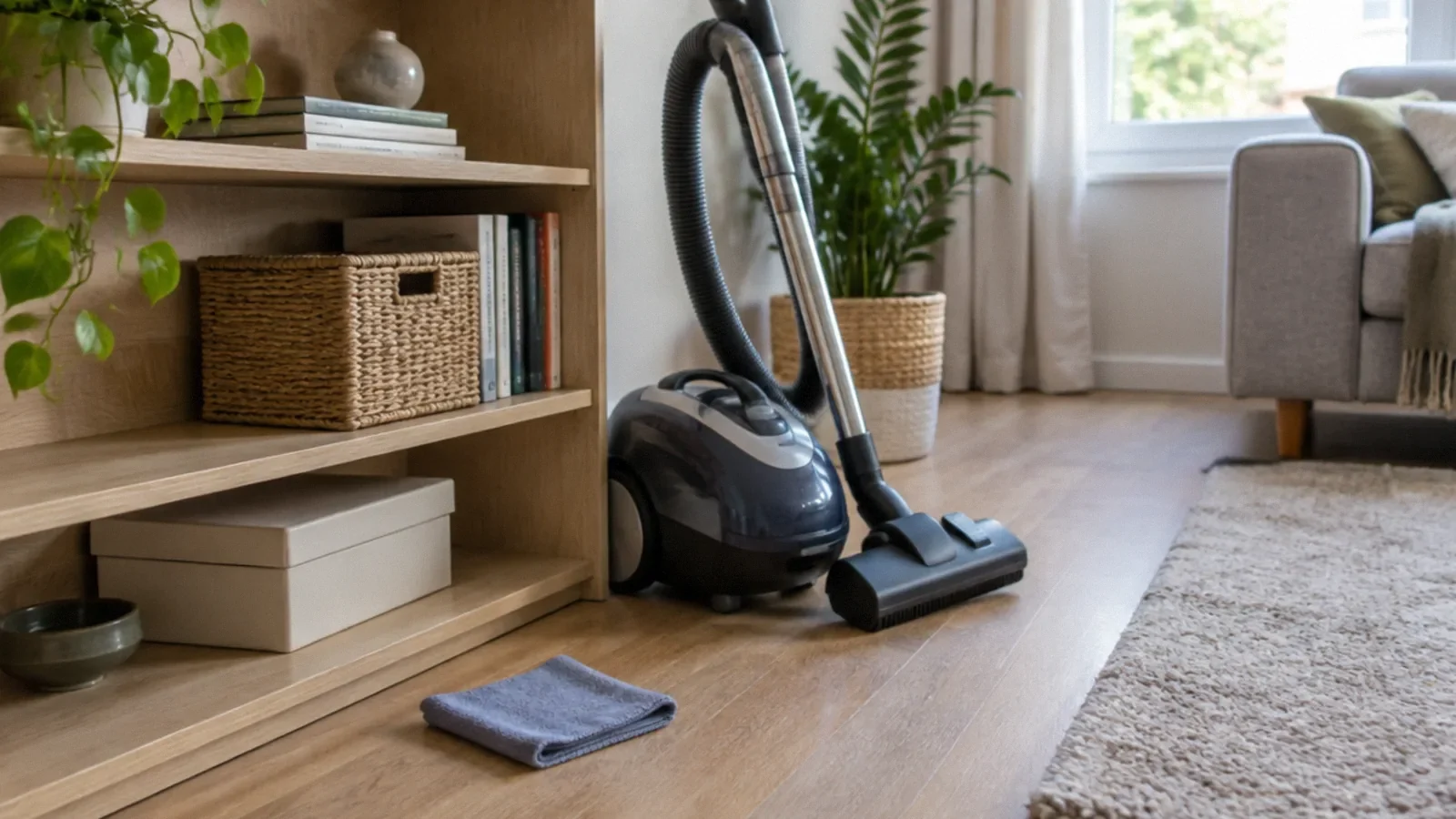
A slightly damp microfiber cloth can collect ordinary dust from shelves and other wipeable surfaces rather than scattering it. Follow the surface manufacturer’s care instructions, work from higher surfaces toward the floor and wash or replace the cloth as it becomes dirty. Keep moisture away from electrical components.
Vacuum floors and rugs with a well-maintained machine; a vacuum with suitable particle filtration can help contain what it collects. Empty it according to the manufacturer’s directions. Do not use a household vacuum for hazardous renovation debris or a suspected lead or asbestos disturbance.
Bedding, carpets and dust mites
Wash bedding according to its care label and clean bedroom surfaces regularly. Dust mites are not the same thing as all household dust; where allergies are a concern, discuss a practical plan with a healthcare professional. A carpet or mattress treatment should be compatible with the material and its care instructions.
Avoid saturating carpet or upholstery. Moisture left in padding can create another problem. Dry cleaned materials promptly and address any leak or dampness first. An odor or visible mark should be investigated rather than covered with fragrance.
Filters and air cleaners
Follow the HVAC manufacturer’s instructions for filter size, fit, replacement and compatibility. A filter that does not fit can allow air to bypass it; a product with too much resistance may not suit a particular system. Ask an HVAC professional if the equipment requirements are unclear.
EPA explains that filtration can supplement source control and ventilation, but portable air cleaners and HVAC filters do not remove every pollutant. Select a portable cleaner for the room and follow its maintenance instructions. Avoid assuming that a device makes hazardous dust safe to disturb.
Pets, basements and recurring buildup
For homes with dogs or cats, regular grooming suited to the animal and cleaning washable bedding can reduce some accumulated hair and dander. A room with pets may need more frequent vacuuming. Keep cleaners and loose equipment out of reach of animals and children.
In a basement, distinguish dry tracked dust from material associated with water intrusion, crumbling surfaces or remodeling. Fix moisture and investigate the source. Do not sweep suspicious insulation or old deteriorating paint; disturbance can create an exposure that was not apparent from appearance.
Heavy dust and hazardous materials
If thick dust accumulated during an ordinary, known household activity, work in manageable sections and use appropriate cleaning methods for the surface. Avoid dry sweeping that sends particles into the air. For anyone with respiratory concerns, arrange help and follow relevant medical advice.
Renovation dust in older homes may contain lead from disturbed paint, and some building materials can contain asbestos. Fire residue and mold-contaminated debris also require different precautions. Stop disturbing uncertain material and consult qualified professionals or local health authorities before cleanup.
When to investigate the HVAC system
Inspect the accessible filter and visible registers without opening equipment or reaching into ducts. EPA does not recommend routine duct cleaning for every home, but substantial visible mold in system components, pest infestation or excessive debris released into rooms may justify professional evaluation.
If an HVAC system is known or suspected to be contaminated with mold, do not operate it until it is assessed because it may spread contamination. A contractor should identify the cause, explain the proposed scope and provide a written estimate. Repeated dust after cleaning is a reason to investigate, not proof of a particular diagnosis.
Checklist
- Control dust sources at entrances and during projects.
- Use suitable damp cleaning methods and maintain your vacuum.
- Replace compatible HVAC filters as directed.
- Keep materials dry and address leaks.
- Do not disturb dust that could contain hazardous materials.
Common questions
Can I make a room completely dust free?
No ordinary cleaning routine keeps a room permanently dust free, but source control and regular cleaning can reduce buildup.
Why does my house get dusty so quickly?
Tracked soil, fabrics, pets, outdoor air, activities and filtration can all contribute. Inspect the likely sources instead of assuming a single cause.
Should I clean air ducts to reduce dust?
Not automatically. EPA identifies specific conditions that may justify considering professional duct cleaning; a dusty register alone does not prove the system needs it.
What if I find dust from an old renovation?
Avoid disturbing unknown debris. Ask an appropriate professional or health authority about potential lead, asbestos or other hazards.
Sources
- U.S. EPA: Improving indoor air quality at homefederal guidance
- U.S. EPA: Air cleaners and filters in the homefederal guidance
- U.S. EPA: Should you have air ducts cleaned?federal guidance