
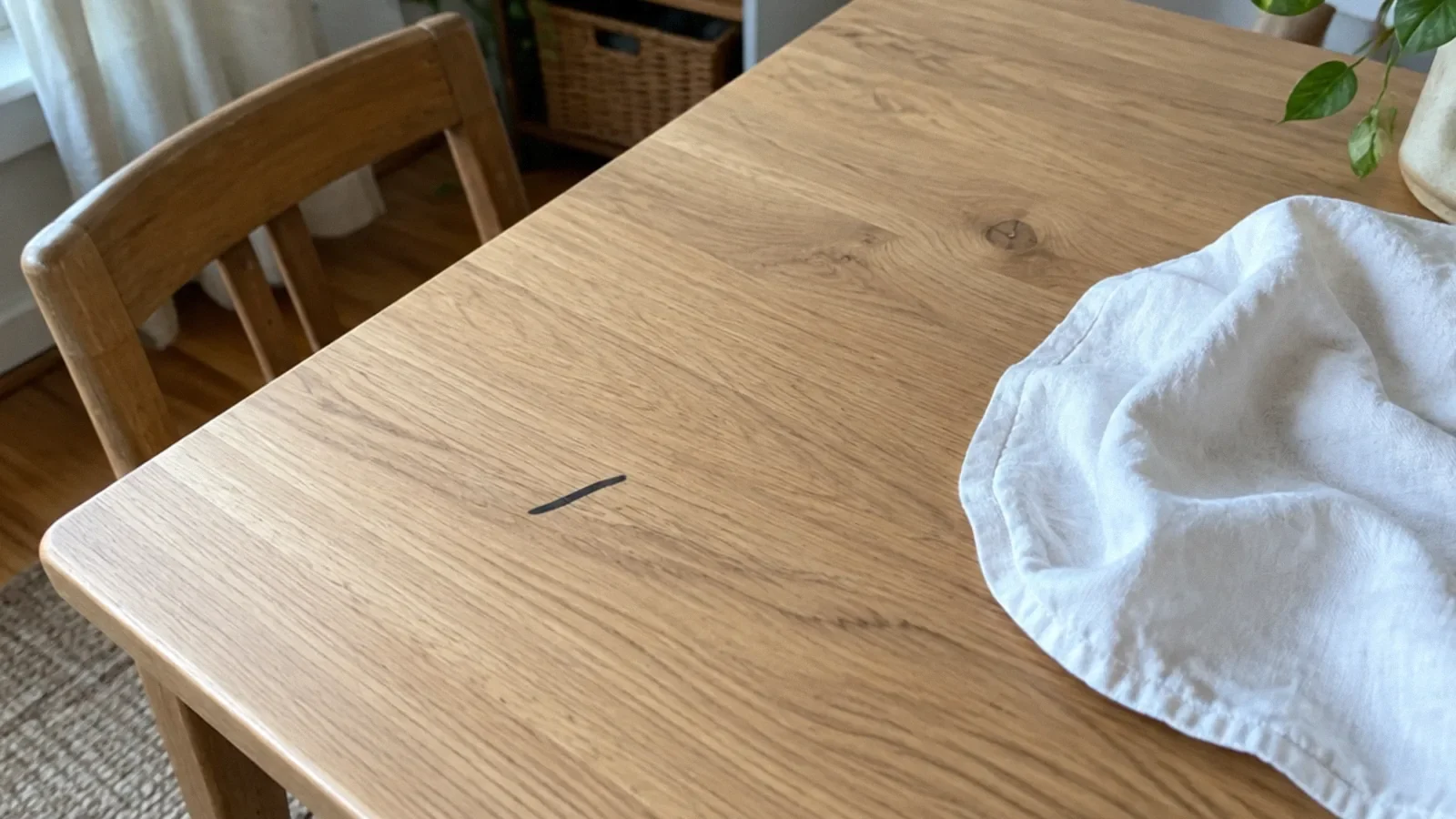
SHORT ANSWER
First identify the surface and finish. Blot fresh ink with a clean cloth, follow the furniture or flooring maker’s care instructions and test any approved product in a hidden spot. Permanent ink can penetrate wood or damage a finish; aggressive solvents and abrasives can make the repair worse.
Identify what you are cleaning
A wooden table, a finished hardwood floor, laminate and wood veneer can look similar but respond differently to moisture and cleaners. Check the product documentation or ask the manufacturer. The protective finish may be polyurethane, oil, wax, paint or another coating; knowing the finish matters as much as knowing the wood species.
For an antique, a valuable piece, a damaged coating or an unknown surface, a furniture conservator or floor professional can inspect the mark. Do not assume a recipe for unfinished lumber is safe for a sealed floor or thin veneer.
Blot a fresh marker mark
For fresh ink, gently blot with a clean soft white cloth before the mark spreads. Turn to a clean part of the cloth as ink transfers. Avoid rubbing briskly across the line, which can widen the mark or push pigment into exposed grain.
The University of Georgia Extension advises prompt blotting for ink on some finished wood surfaces and notes that permanent inks can be very difficult to remove. The maker’s instructions for the actual finish take precedence over a generic treatment.
Use the least aggressive approved method
If the maker permits a lightly damp cloth on that finish, wring it thoroughly and test a hidden area before touching the mark. Work gently, using minimal moisture, and dry the surface promptly with a separate soft cloth. Do not allow water to collect in floor joints, table seams or veneer edges.
If a manufacturer specifies a compatible wood cleaner, use it exactly as directed after a small test. Stop immediately if color transfers from the finish, the gloss changes, the coating becomes sticky or the ink spreads. Repeated pressure can wear away a finish even without a strong chemical.
Do not assume alcohol is harmless
Permanent marker can contain ink that responds to solvents, but rubbing alcohol, acetone and similar products can also dissolve, dull or discolor some finishes. Testing only on the mark itself is too late if the finish reacts. Do not use a solvent unless the surface maker or a qualified specialist confirms its suitability.
Avoid mixing cleaning products. Some home remedies combine ingredients without accounting for chemical reactions or the finish underneath. Keep all cleaners away from children and pets and follow the label’s ventilation and storage directions.
Tabletops, floors and veneer
A tabletop may have a thin decorative veneer over a core, while a floor may have a factory-applied protective coating. Scrubbing through either can expose a surface that no longer matches the surrounding area. Solid wood does not mean the existing coating can be safely sanded without an assessment.
For flooring, inspect whether the line lies on top of the finish, in a worn area or across seams. Furniture legs, rugs and water can conceal related damage. An experienced flooring professional can explain whether a localized repair is feasible and whether it will be visible.
Why sanding and bleach need professional judgment
Abrasive pads, steel wool and sanding remove material as well as ink. On a thin veneer or prefinished floor, even a small attempt may create a permanent light patch or change the sheen. Stop rather than escalating through progressively harsher methods.
Wood bleaches can alter natural wood color and pose exposure risks; they are not an all-purpose first step. A specialist can assess whether a controlled repair or refinishing is justified and discuss the expected color and finish match before work starts.
What if the ink remains?
Some permanent inks penetrate an open grain or an already damaged coating and cannot be completely removed with gentle surface cleaning. Take a photograph in natural light and note when the mark appeared and what, if anything, was applied. This history helps a repair professional avoid incompatible products.
Possible professional options include localized finish repair, a board replacement, furniture refinishing or leaving a faint mark. The best choice depends on value, finish thickness, cost and how much appearance variation you can accept. Ask for an estimate without a promise of an invisible repair.
Prevent the next mark
Keep markers capped and use a protective writing mat when children or adults draw at a wood table. Test whether desk pads trap moisture, and clean them according to the furniture maker’s instructions. Store pens where they cannot roll onto upholstery or carpet.
Maintain the finish as directed and wipe up spills promptly. For floors, check the approved cleaning instructions before using a powered scrubber, steam or concentrated cleaner. A cared-for finish helps protect the surface, but it is not an absolute barrier to every ink.
Furniture and floors that are not wood
Furniture may be wood, veneer, fabric, leather or plastic. The wood steps here do not establish a safe treatment for upholstery or another material: identify the surface and follow its care label or ask a specialist. For a nonwood floor, identify the manufacturer and finish first; vinyl, stone, tile and laminate may respond differently to moisture and solvents. Test only a product approved for that surface.
Checklist
- Identify the surface and its finish.
- Blot fresh ink without spreading it.
- Test a maker-approved method in a hidden spot.
- Stop if the finish or color changes.
Common questions
Will rubbing alcohol remove permanent marker from hardwood?
It may affect some ink, but can also damage floor finishes. Use it only if the flooring manufacturer or a qualified specialist confirms it is suitable.
Can I use a magic eraser on a wood table?
A melamine cleaning pad is abrasive and can dull or remove finish. Check the furniture maker’s instructions first.
Can permanent marker soak into wood?
Yes. Ink can penetrate exposed or damaged wood, making complete removal difficult without professional repair.
Is a damp cloth safe on every wood floor?
No. Follow the floor maker’s directions and avoid standing water, especially at seams and damaged areas.
Can permanent marker be removed from any furniture?
Treatment depends on the surface and finish. The wood-safe steps in this guide may not suit leather, upholstery or plastics; follow the furniture manufacturer’s care instructions and test any approved product in an inconspicuous area.
How do I remove marker from a floor that is not wood?
Identify the floor and follow its manufacturer’s care instructions. A method suitable for wood may damage vinyl, tile or another finish. Test only an approved cleaner and avoid abrasive or unverified solvents.
Sources
- University of Georgia Extension: Ink stain removaluniversity extension guidance
- Poison Control: Wood floor cleanerspoison center guidance
- National Wood Flooring Association: Wood floor careindustry care guidance